Do you want to learn more about what we do or how we can support you? Please select your sector to connect with the relevant member of the team:
Please select your sector


Hi, I’m Gabi and I’m one of the Directors at Metta. Please send your message and I will get back to you as soon as possible.
Article
written by
Gaby
5 min read
Island Innovation Programmes: What Works, What Doesn't, and How to Design for Real Impact
Islands are at the forefront of some of the world's most pressing challenges - climate change, biodiversity loss, economic fragility, and resource constraints - with fewer resources to respond than almost anywhere else on earth. They are not peripheral. They are places of extraordinary biodiversity, deep cultural richness, and home to hundreds of millions of people navigating a climate crisis they did not create.

Innovation plays a key role in helping address these challenges. And global frameworks have recognised this. From the Paris Agreement to the Antigua and Barbuda Agenda for SIDS, the importance of innovation, resilience, and sustainable development for island communities has been consistently affirmed. More recently, the EU Islands Strategy is being finalised, and the UK recently published its SIDS Strategy 2026-2030. Attention is growing.
The gap between intent and impact
Innovation programmes, such as incubators, accelerators, fellowships, and challenge funds, have emerged as a primary means of addressing these challenges globally. Whilst the intent is genuine, many fail to make lasting ecological, social, and economic impact; often underfunded, built on imported models, disconnected from local realities, and measured by outputs rather than change.
Too often, communities are consulted rather than empowered. Knowledge leaves with the delivery team. And programmes are measured by cohort numbers and events delivered rather than what actually changes for the people, communities, and ecosystems they serve.
In island contexts, where resources are scarce and the stakes are high, that gap is too costly to ignore.
From the field
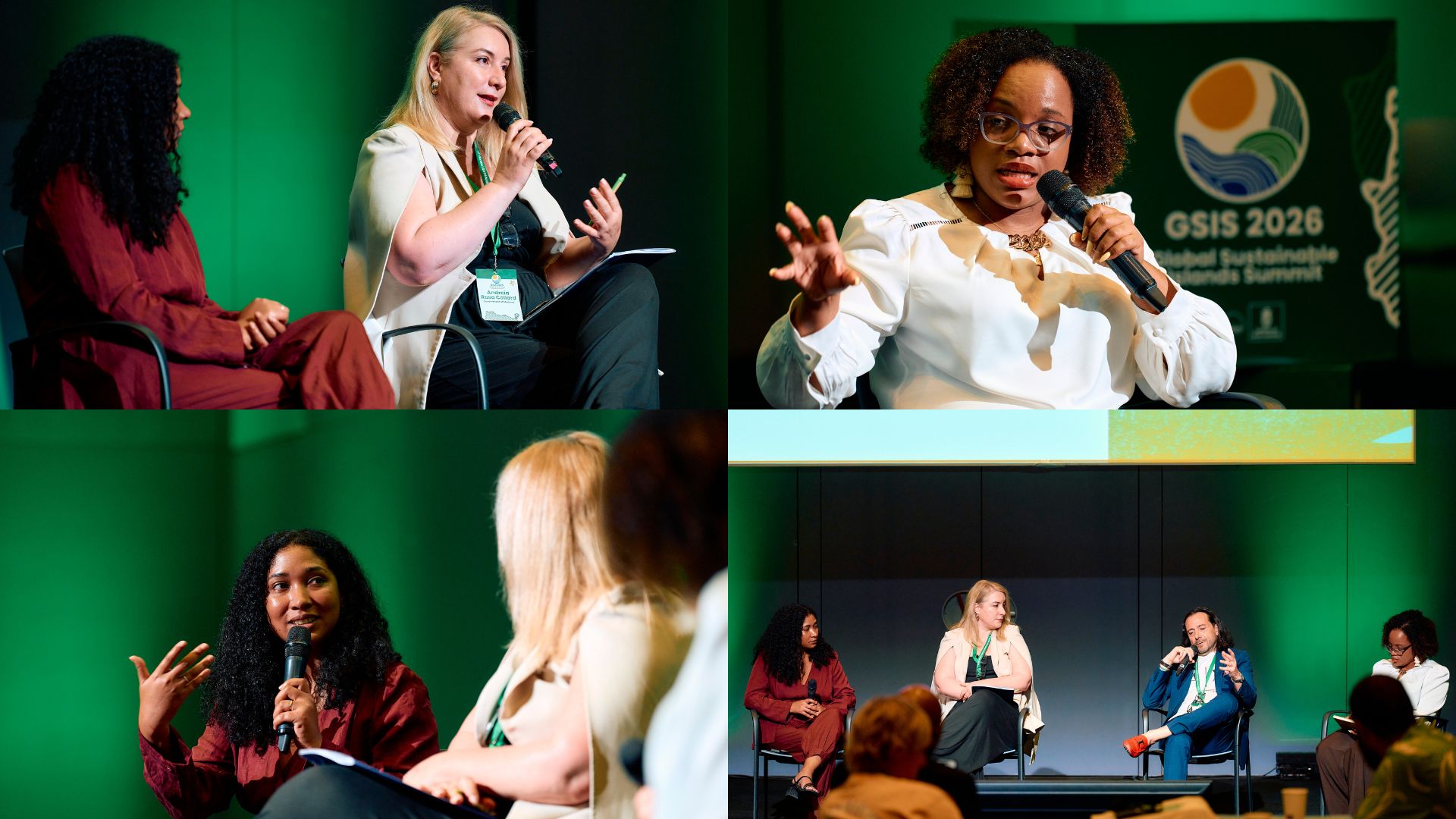
In April 2026, in partnership with Island Innovation at the Global Sustainable Islands Summit in Gran Canaria, Metta convened a session with practitioners from across the Mediterranean, Atlantic, Caribbean, Indian Ocean, and Pacific to explore how we can do this better.
The conversation was anchored by three practitioners with hard-won experience across government, development finance, and innovation ecosystem building:
ANDREIA ROSA COLLARD, Director of Competitiveness, Innovation and Sustainability at the Direção Regional de Competitividade, Inovação e Sustentabilidade under the GOVERNMENT OF MADEIRA, offered a government perspective on creating the conditions for innovation to thrive
ASHAKI GOODWIN, Director of Government Affairs at PVBLIC Foundation and UN Representative for the Development Bank for Resilient Prosperity, brought a global perspective on how international institutions and development finance can better serve island communities.
ALESSANDRO SILVESTRI, Managing Partner at MALTAccelerate, contributed deep experience building and scaling island-based innovation ecosystems across the Mediterranean.
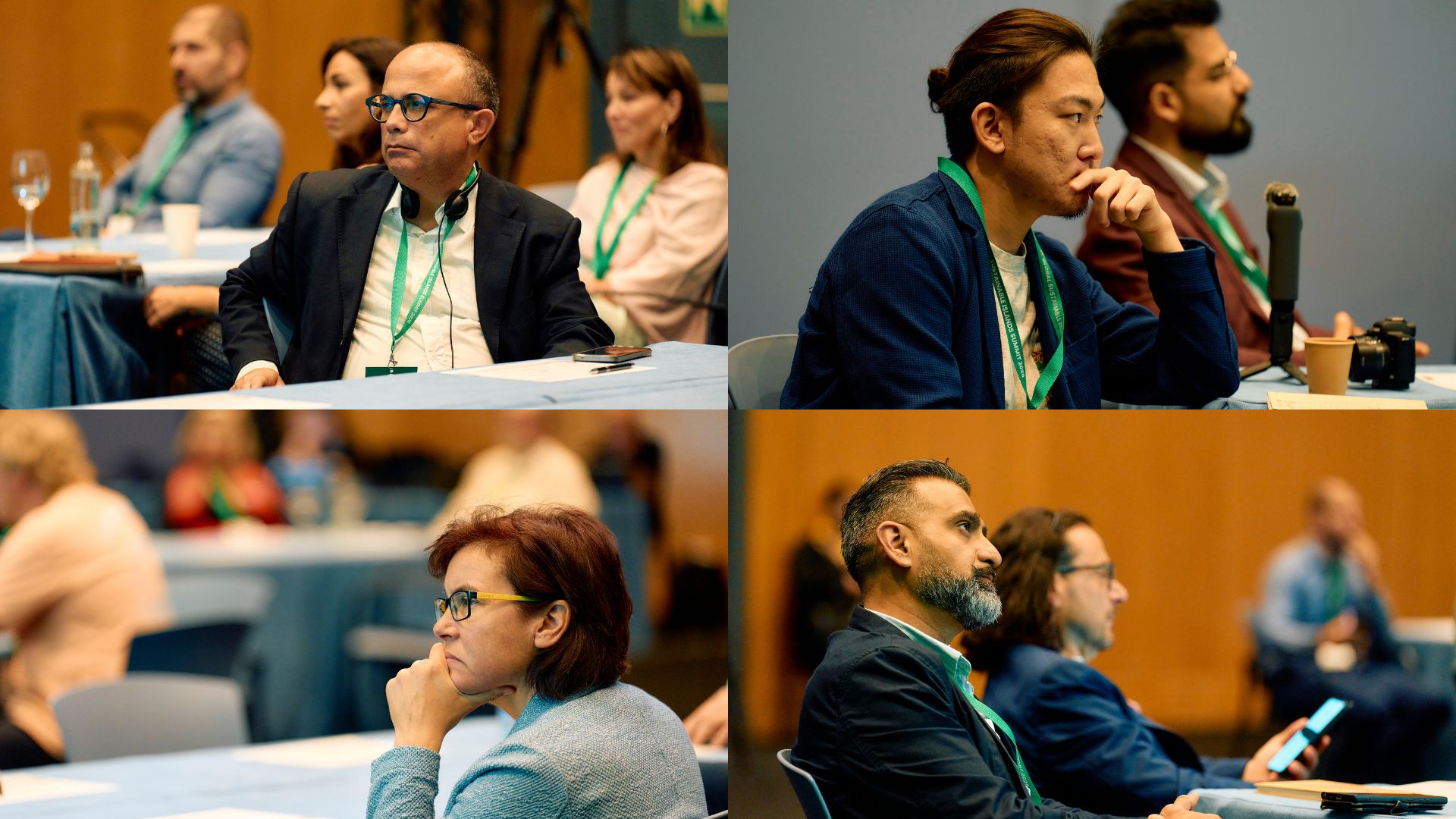
Drawing on a multistakeholder fireside discussion, live audience survey, and facilitated group work, the session brought together +20 practitioners to examine the structural barriers to island innovation impact honestly, and in practice.
What we found
Eight findings emerged consistently across very different island contexts, roles, and programme types.
The gap between ambition and impact is structural, not ideational, often driven by bureaucracy, short funding cycles, imported models, and decision-making power held far from the ground.
Real impact is defined by the communities it touches: sovereignty, continuity, ownership, and equity, not cohort numbers or ventures launched.
Programmes are one instrument within a broader system. They cannot substitute for the ecosystem conditions they depend on: policy, finance, culture, and governance.
Identity and inclusion are design requirements. Who benefits must be answered explicitly, accounting for historical exclusion and unequal access to resources.
Programme integrity is measured by what is left behind. Capability, relationships, institutional memory, and locally-owned processes.
Island innovation programmes should also help identify, protect, and responsibly value the natural and cultural assets that underpin long-term prosperity. For many island economies, resilience depends on the ability to steward natural assets while creating fair economic value from them.
Data should be treated as core programme infrastructure; programmes must build or strengthen the local ability to collect, manage, and use data so that outcomes can be measured, verified, financed, and sustained.
Well-designed innovation programmes can bridge the gap between local ideas and finance by building capacity, improving data, and creating investable pipelines. They help communities move from concepts to bankable, nature-positive projects.
A practical framework for better programme design?
In response to these findings, the paper introduces the TIDES framework: a practical diagnostic and design tool for those designing or funding innovation programmes in constrained ecosystems. Structured around seven dimensions: Territory, Intent, Intervention, Impact, Dependencies, Endurance, and Stakeholders, the framework was stress-tested and extended by session participants, incorporating systems thinking, identity and inclusion, and the politics of programme design.
Designing and Delivering Impactful Island Innovation Programmes is available to download below. If you are designing or funding innovation programmes in island contexts, we would love to know what you think and what might be missing.
With deep thanks to every practitioner who contributed their time, insights, and expertise to make this what it is.
Get in touch
We are always keen to connect with others working in this space. If you would like to discuss the findings, share your own experience, or explore collaboration, Gabriella Hernandez would love to hear from you.
If this paper raises questions, challenges assumptions, or connects to work you are doing, get in touch.
See More Insights

Article
Supporting bilateral innovation and resilience in the UK and KuwaitWe’re delighted to be working with British Embassy Kuwait to support trade and innovation between the two countries.

Article
The cost of performing certaintyI recently spoke at TechTides on getting comfortable with not knowing. Thanks to organisers Al, Cassie and the team for inviting me along! Here’s a condensed version of the talk.

Podcast
IB2.8 — AI, Risk, & the Future of Power | Inside Smart Energy at E.ONWhat eight years of building a foresight function inside one of Europe's largest energy companies teaches us about long-term thinking, uncertainty, and the courage to take a position.

Article
What makes innovation ecosystems actually work?Three learnings from more than a decade of getting it wrong and right.
Article
Island Innovation Programmes: What Works, What Doesn't, and How to Design for Real ImpactIslands are at the forefront of some of the world's most pressing challenges - climate change, biodiversity loss, economic fragility, and resource constraints - with fewer resources to respond than almost anywhere else on earth. They are not peripheral. They are places of extraordinary biodiversity, deep cultural richness, and home to hundreds of millions of people navigating a climate crisis they did not create.